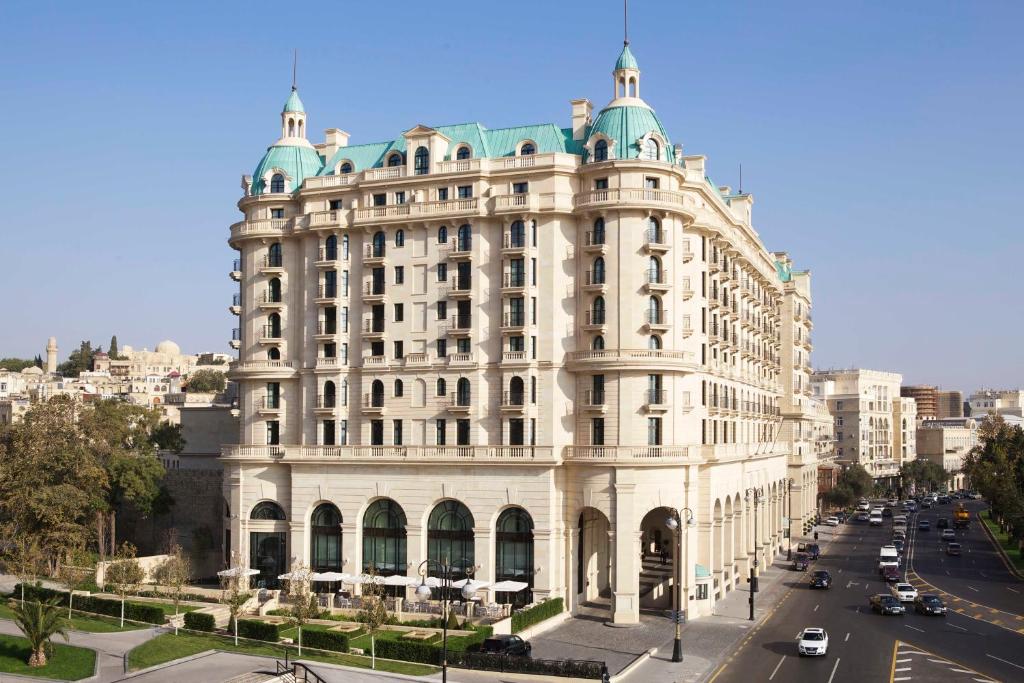
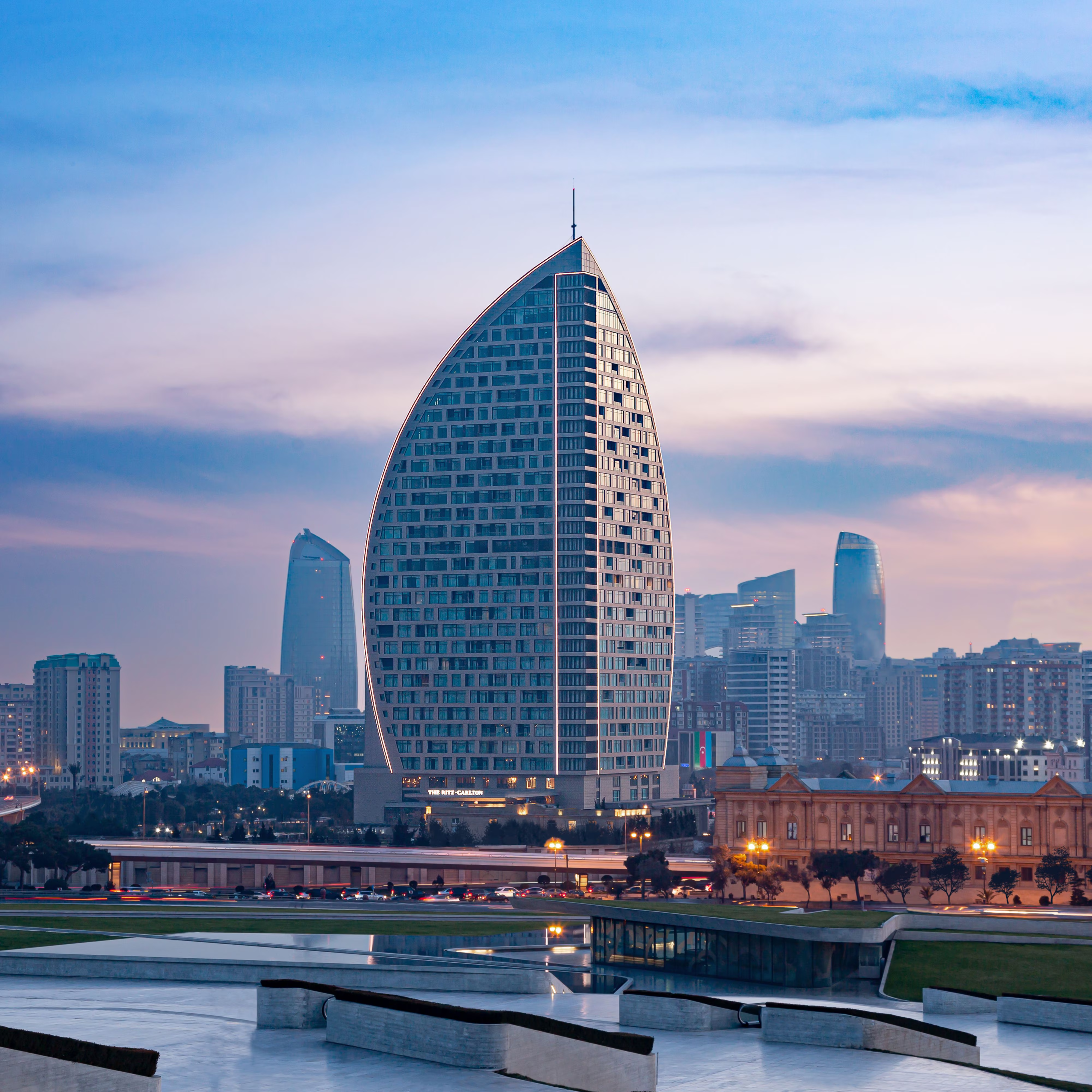
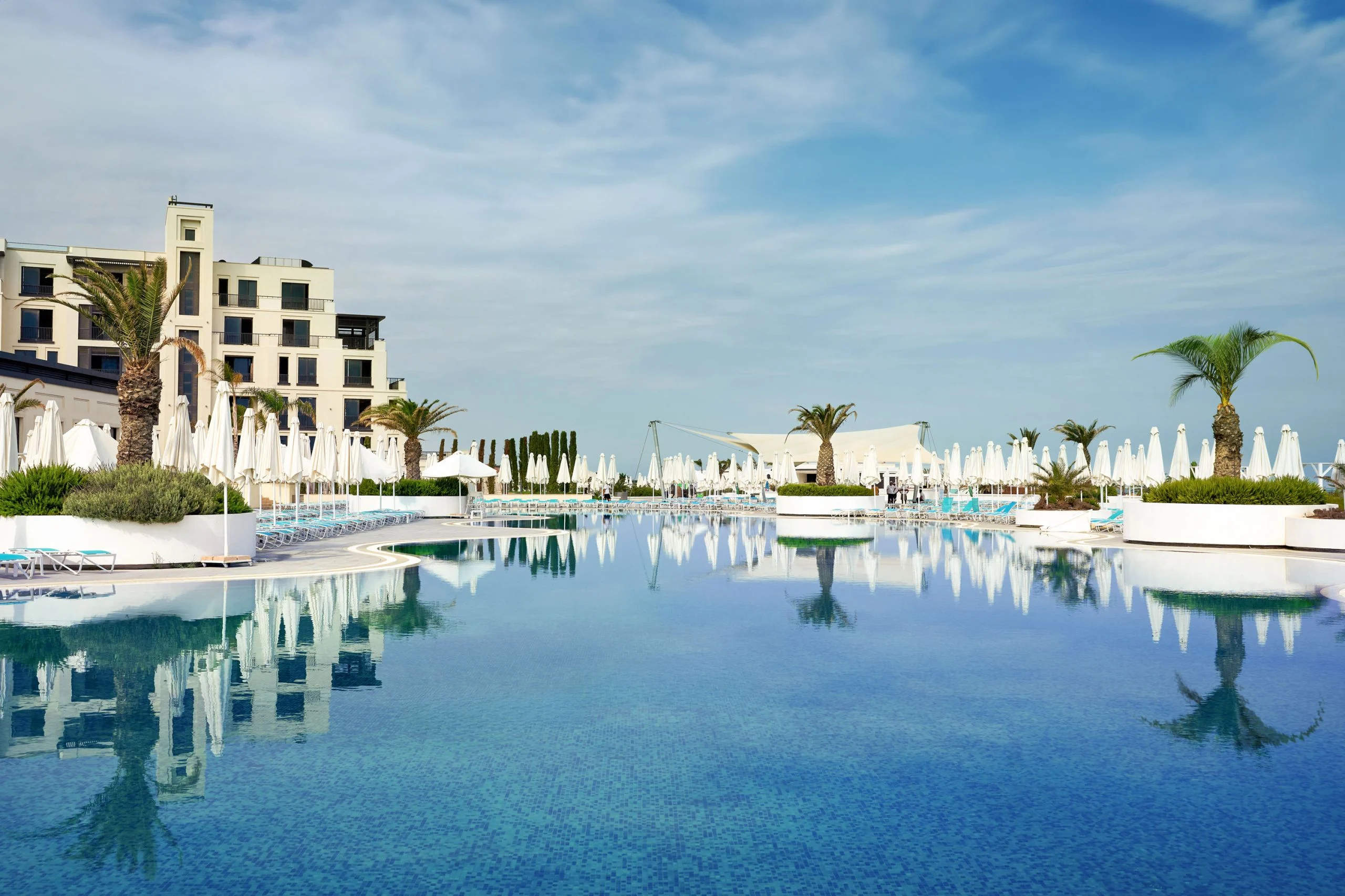
Four Seasons' Caspian outpost — Forbes Five-Star property on Baku's waterfront promenade, opened 2012.
BrandFour Seasons Hotels and Resorts
DestinationBaku
RegionEurope
Price TierTier 2 ($2k-$5k)
SettingWaterfront promenade
Best ForBusiness travelers requiring predictable luxury-tier service, repeat Four Seasons guests collecting properties, couples on Caspian Coast milestone trips.
PrivacyHigh
ServicePersonalized concierge service
ButlerStandard luxury service
Private PoolNo
Built2012
Four Seasons Hotel Baku opened in 2012 on the city's waterfront promenade, bringing the brand's operational standard to the Caspian Coast. The property holds Forbes Five-Star recognition and runs the Four Seasons service template — personalized concierge, 24-hour room service, high staff-retention r
Key Features
Spa and wellness center
Fine dining restaurants
Indoor swimming pool
Meeting and event spaces
24-hour room service
Luxury transportation services
Dining
Zafferano Restaurant
Bentleys Whisky Bar
Piazza Lounge
Signature Experience
The Four Seasons service standard executed in Baku — staff recognition, anticipated needs, operational consistency that doesn't exist elsewhere in the city at this tier.
Four Seasons' operational consistency in a market where luxury-tier service execution is less predictable. Forbes Five-Star recognition and waterfront promenade location give it structural advantage over Baku's competing luxury options.
Signature Suite: Four Seasons Executive Suite
Elegant sitting room, efficient work space, walk-through wardrobe, peaceful bedroom
Best time: April through June and September through October provide ideal conditions for Baku, with comfortable temperatures perfect for exploring the city's unique architectural contrasts and vibrant cultural scene.
Demand: Baku maintains consistent luxury demand through business travel, diplomatic visits, and its growing cultural tourism profile. The Formula One Grand Prix in April creates the city's most significant demand spike, while oil industry business travel provides year-round hotel occupancy.
Pricing: Ultra-luxury properties in Baku offer excellent value compared to Western European equivalents, with premium rates during the Formula One period representing the annual pricing peak. Year-round business travel maintains stable occupancy at the finest Caspian waterfront hotels.
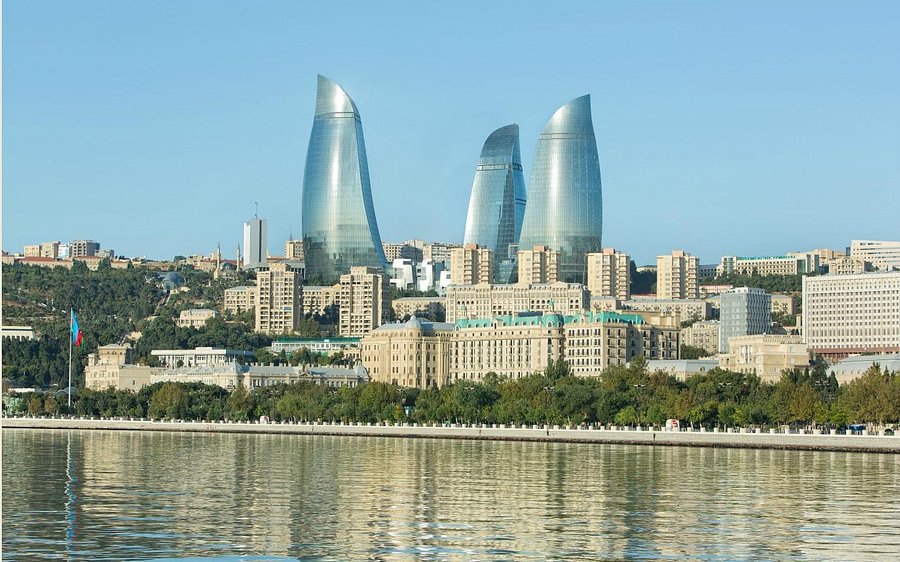
Insider tip: Arrange a private guided tour of the Flame Towers' observation deck at sunset followed by dinner at a traditional baku house restaurant in the Old City - a contrast of ancient and ultramodern that defines Baku's unique character and is best experienced through your hotel's exclusive cultural concier
Avoid: Avoid July and August when Baku's summer heat, combined with the industrial character of this oil city, can make outdoor exploration less comfortable and the city's leisure appeal is at its lowest relative to its cultural richness.